Top 10 Tips to Extend Service Life of LED Display Modules?

Time:2026-05-03 Author:Sophia
0%

In recent years, LED display modules have gained tremendous popularity in diverse sectors, thanks to their energy efficiency and vibrant display capabilities. Research shows that properly maintained LED displays can last up to 100,000 hours, significantly outpacing traditional display technologies. Therefore, understanding how to extend the service life of LED display modules is crucial for businesses aiming for sustainability and cost-effectiveness.

Regular maintenance and optimal usage practices play a pivotal role in maximizing the lifespan of these modules. Over 30% of failures in LED displays arise from inadequate heat management and poor environmental conditions. Implementing cooling solutions and protecting displays from harsh weather can significantly mitigate this risk. However, many companies overlook these essential practices, leading to premature failure and increased replacement costs.

While LED technology brings immense advantages, it also requires a thoughtful approach to ensure longevity. Ignoring environmental factors or neglecting routine check-ups can hinder performance. Investing time and resources to extend the service life of LED display modules not only enhances reliability but also upholds the sustainability goals many organizations strive for in today's environmentally-conscious marketplace.
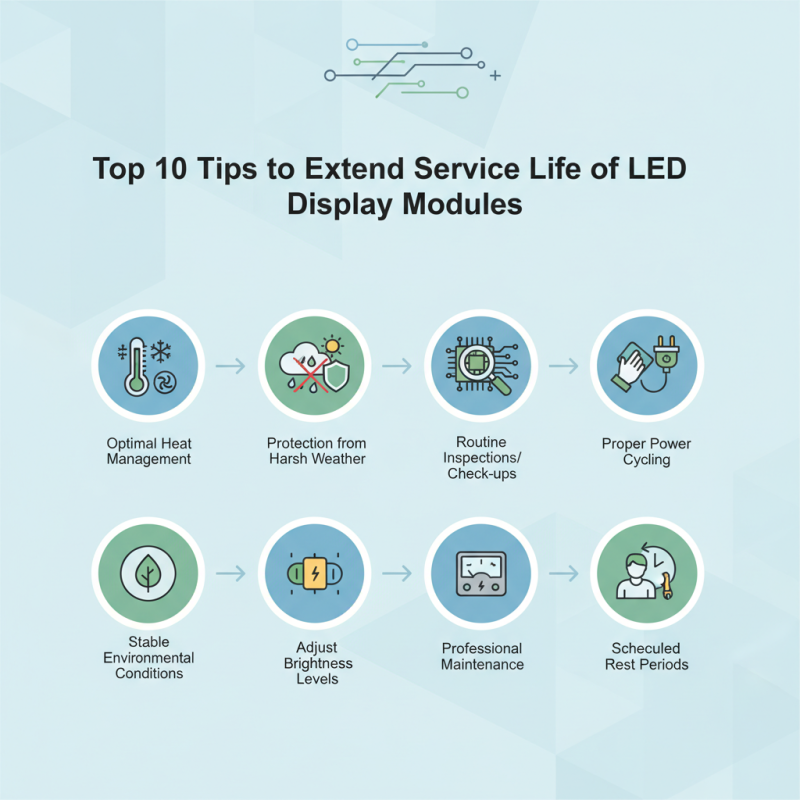
Top 10 Tips to Extend Service Life of LED Display Modules?

Understanding the Basics of LED Display Modules and Their Lifespan

LED display modules are integral to various applications, from advertising to entertainment. Understanding their lifespan is crucial for maximizing investment. Typically, these modules can last up to 100,000 hours under ideal conditions. However, various factors influence this longevity, including operating temperature, humidity, and power supply quality. The industry reports indicate that maintaining optimal environmental conditions can enhance performance significantly.

To extend the life of LED display modules, ensure proper ventilation around the installation. Heat builds up can lead to premature failures. Another tip is to control brightness levels. Excessive brightness not only consumes more energy but also generates more heat. A calibrated brightness level can prolong the life of your display modules.

Regular maintenance checks are vital. Dust accumulation can obstruct airflow and increase temperatures. Implement scheduled cleanings to prevent this issue. Using surge protectors can also shield LED modules from voltage spikes, which are common in many electrical systems. Following these practices contributes to a more reliable and long-lasting service life for your LED displays.

Optimal Operating Conditions for Prolonging LED Display Module Life

Maintaining optimal operating conditions is key to extending the service life of LED display modules. Excessive heat can significantly shorten their lifespan. Ensure proper ventilation in enclosed spaces. This helps dissipate heat efficiently. Keeping the ambient temperature below recommended levels is essential.

Monitor humidity levels as well. High humidity can lead to condensation inside the modules. This moisture can cause electrical failures. Aim to keep indoor humidity around 40-60%. Additionally, regular cleaning helps prevent dust buildup. Dust can impede air circulation and lead to overheating.

Another important factor is the power supply. Using unstable or fluctuating power can damage LED modules. Utilize high-quality, regulated power supplies. This minimizes the risk of voltage spikes. Attention to the operating voltage is critical. Overdriving the LEDs may lead to premature failure. Regular maintenance checks can identify and address these issues early, preventing larger problems later.

Top 10 Tips to Extend Service Life of LED Display Modules

Tip Number Tip Description Expected Outcome
1 Optimal Temperature Keep operating temperatures between 20-30°C. Reduces overheating and enhances lifespan.
2 Proper Ventilation Ensure adequate airflow around the display. Minimizes heat accumulation.
3 Regular Cleaning Clean the surface regularly to remove dust and debris. Improves display clarity and performance.
4 Use Surge Protectors Install surge protectors to guard against electrical spikes. Protects internal components.
5 Limit Brightness Operate at lower brightness settings when possible. Extends LED lifespan.
6 Humidity Control Maintain humidity levels between 40-60%. Prevents moisture damage.
7 Avoid Direct Sunlight Position displays away from direct sunlight. Reduces temperature stress.
8 Frequent Diagnostics Conduct regular system checks. Identifies issues early.
9 Update Firmware Keep software up to date. Enhances efficiency and performance.
10 Use Quality Components Choose high-quality parts for install and repairs. Ensures durability and reliability.

Regular Maintenance Practices for Enhanced LED Display Longevity

Regular maintenance is crucial for prolonging the life of LED display modules. Cleanliness is the first step. Dust and dirt can accumulate on the screens, leading to overheating. A simple wipe down with a microfiber cloth can prevent this. Ensure you avoid using harsh chemicals as they may damage the display. Cleaning should occur routinely, perhaps every month, depending on usage.

Another important element is temperature control. LED displays are sensitive to heat. Excessive heat can reduce their lifespan and performance. Always monitor the ambient temperature. Proper ventilation is key. Install cooling systems if necessary, especially in enclosed spaces. It's vital to check if the cooling systems are functioning effectively.

Lastly, inspect for damaged components regularly. Faded colors or flickering can signal an issue. Addressing these problems promptly can save time and costs. Regularly updating software is also essential for peak performance. This practice not only enhances the display but also prevents future malfunctions. Investing time in these maintenance tasks yields a longer service life for LED displays.

Effective Cooling Solutions for LED Displays to Prevent Overheating

Effective cooling solutions are vital for maintaining the longevity of LED display modules. Overheating can cause significant damage, leading to reduced performance and early failures. One practical approach is to implement active cooling methods, such as fans or blowers. These devices can help circulate air and dissipate heat effectively. Ensuring they are placed correctly is crucial for optimizing airflow.


Passive cooling techniques are equally important. Utilizing heat sinks is a common method that allows excess heat to dissipate without the need for electrical power. Thermal paste can enhance the contact between components, improving heat transfer. It's essential to monitor the temperature of the display regularly. Infrared thermometers can be used for this purpose, providing instant feedback on performance.


Reflection upon these strategies reveals that a balance must be struck. Inadequate cooling can lead to problems, while excessive cooling might waste energy. Continuous evaluation of the cooling solution's effectiveness can lead to better decisions. Remember, every display system is unique. What works for one may not work for another.

Choosing Quality Components to Ensure Durability of LED Modules

When selecting LED display modules, the quality of components directly impacts durability. A recent industry report indicates that nearly 30% of LED failures result from subpar materials. Choosing top-grade diodes, drivers, and capacitors significantly extends lifespan. Research shows that modules using high-quality components can last up to 50,000 hours, compared to only 20,000 hours for inferior alternatives.

Thermal management is another critical aspect. Quality heat sinks and efficient designs minimize thermal stress on LEDs. A study revealed that approximately 60% of LED module failures stem from inadequate heat dissipation. Proper thermal strategies can mitigate degradation and preserve performance over time.

Regular maintenance also plays a role, although it's often overlooked. Dust accumulation can hinder cooling efficiency, leading to premature failures. Some maintenance routines underestimate the importance of cleaning. Without proper upkeep, even high-quality modules may not reach their potential lifespan. Awareness of these factors is essential for ensuring longevity and optimizing the performance of LED display systems.

FAQS

: Why is regular maintenance important for LED displays?

: Regular maintenance prolongs the life of LED displays. Cleaning prevents overheating, which can damage the screen.

How should I clean my LED display?

Use a microfiber cloth to wipe down the screen. Avoid harsh chemicals that can harm the display.

How often should I clean my LED display?

Cleaning should occur routinely, possibly every month, depending on usage patterns and dust accumulation.

What temperature should I maintain for LED displays?

Monitor the ambient temperature closely. Excessive heat reduces lifespan and performance of the LED displays.

What cooling solutions can help with overheating?

Implement active cooling methods like fans or blowers. Passive cooling through heat sinks is equally effective.

How can I check the installation effectiveness of cooling systems?

Regularly inspect and monitor your cooling systems. Confirm that they are functioning effectively to prevent overheating.

What components should I choose for durable LED modules?

Opt for high-quality diodes, drivers, and capacitors. These significantly enhance the lifespan of LED modules.

How does dust affect LED display performance?

Dust accumulation can hinder cooling efficiency. Poor maintenance may prevent high-quality modules from reaching their potential.

What role does thermal management play in LED module durability?

Proper thermal management minimizes thermal stress. Good quality heat sinks help preserve LED performance over time.

What should I reflect on regarding cooling solutions?

A balance is needed; inadequate cooling can cause issues while excessive cooling wastes energy. Continuous evaluation is essential.

Conclusion

To extend the service life of LED display modules, it is essential to understand their fundamental characteristics and lifespan. Optimal operating conditions play a crucial role, as factors like temperature and humidity directly affect performance and longevity. Regular maintenance practices, such as cleaning and inspection, further enhance the durability of these modules.

Implementing effective cooling solutions is vital to prevent overheating, which can significantly reduce the lifespan of LED displays. Additionally, choosing high-quality components ensures the overall durability and reliability of the modules. By focusing on these key aspects, users can effectively extend the service life of LED display modules and maximize their investment in this technology.

Sophia

Sophia

Sophia is a dedicated marketing professional with an exceptional depth of knowledge about her company's products and services. With a keen understanding of market trends and customer needs, she crafts insightful blog posts that not only inform but also engage readers, enriching the company’s online......